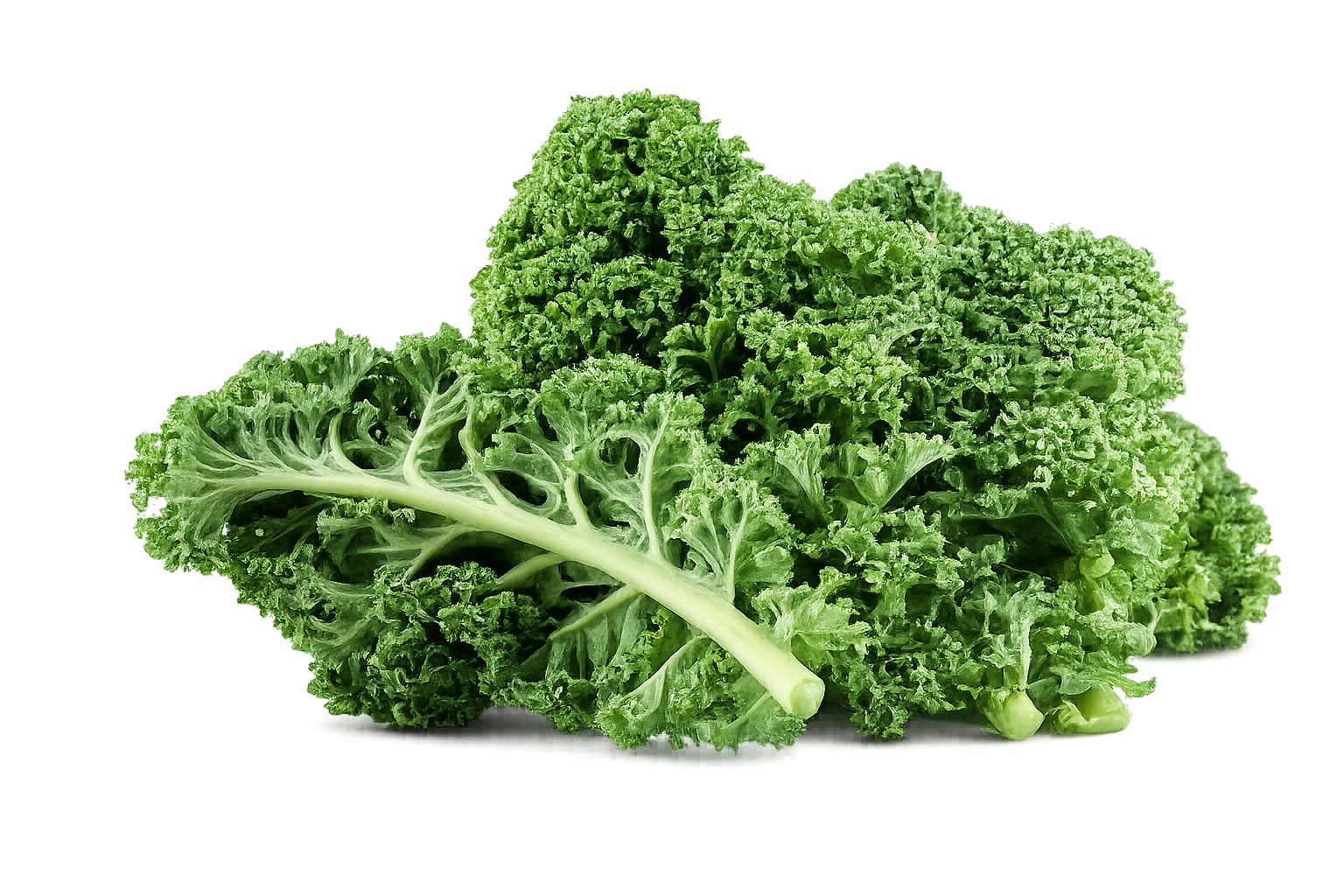
Out of season right now. The next sowing window opens in March.
Growing Calendar
This month: Jul
Plan ahead for this crop
- •Check growing conditions
- •Prepare for next stage


Watch Out For
Cabbage white caterpillars
check leaves regularly
Pigeons will strip plants
use netting
Avoid planting where brassicas grew last year



Grown Organically
Every method in this guide works with natural systems — no synthetic chemicals, no shortcuts.
Read our approachCommon Questions
About growing Kale in the UK
When do I sow and plant out kale in the UK?
Sow kale indoors from April to June, or outdoors in a seedbed from May. Plant out at 45–60cm spacing from June to August. Kale is very hardy and can be harvested through winter and into spring.
Why are there holes in my kale leaves?
Holes are most commonly caused by cabbage white caterpillars or pigeons. Net plants from planting out to exclude both. Check the undersides of leaves for caterpillar eggs and remove them by hand.
Does kale taste better after frost?
Yes — frost converts some of the starches in kale leaves to sugars, making the flavour noticeably sweeter and less bitter. Many growers deliberately leave kale in the ground through the first frosts.
Can I grow kale in containers?
Yes, but use a large container (at least 30–40cm deep) and a fertile compost. Kale grows large — one plant per container is realistic. Water regularly as containers dry out faster than open ground.
Do kale plants need feeding?
Kale is a leafy brassica and responds well to nitrogen-rich feeding. Work well-rotted compost or manure into the soil before planting, and apply a nitrogen-rich liquid feed (nettle tea, fish emulsion or a balanced liquid feed) every three to four weeks during the growing season. Avoid high-potassium feeds — kale grown for leaves needs nitrogen, not potassium. Well-fed plants produce larger, more tender leaves over a longer picking period.
Could a heavy aphid attack mean I am over-feeding with nitrogen?
Possibly yes. High nitrogen levels in plant sap make it significantly more attractive to aphids — the sap becomes richer in amino acids which is exactly what aphids feed on. If you are seeing persistent, heavy aphid infestations despite treatment, check your feeding regime. Fruiting crops like tomatoes that are still being given a nitrogen-rich balanced feed after flowering are especially susceptible. Switch to a high-potassium feed at first flower and reduce overall nitrogen. Healthy, well-balanced plants are more resistant to aphid attack than over-fed ones.
Member guides
There's more to growing Kale than this guide covers.
Seasonal reminders, deeper guides, and the small adjustments that change a harvest.