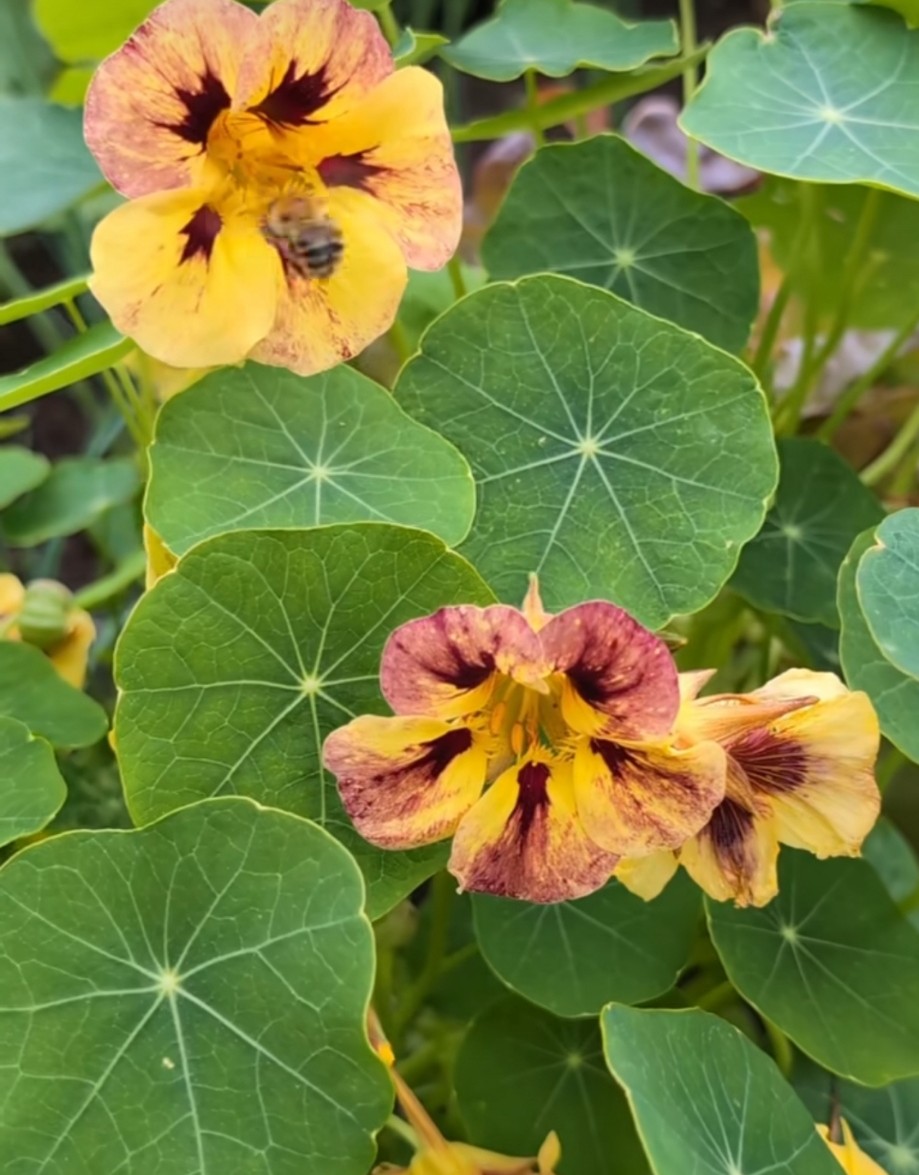
Nasturtium should be ready to harvest this month — check for size and colour.
Growing Calendar
This month: Jul
Log to journalReady to harvest now
- •Check size and ripeness
- •Harvest regularly
- •Store or use fresh


Watch Out For
Blackfly colonise heavily
use as a trap crop to protect nearby vegetables; spray off with water or leave for predators to manage naturally
Rich soil reduces flowering
grow in poor soil without added feed; too much nitrogen produces lush leaves but very few blooms


Grown Organically
Every method in this guide works with natural systems — no synthetic chemicals, no shortcuts.
Read our approachCommon Questions
About growing Nasturtium in the UK
When do I sow nasturtiums in the UK?
Sow nasturtiums directly outside from April to June, or start indoors in April for an earlier display. They are frost-tender — do not sow outside until after the last frost. They are extremely fast-growing and will flower within 8–10 weeks of sowing.
Are nasturtiums edible?
Fully edible — flowers, leaves and seeds are all used in cooking. Flowers and leaves have a peppery, watercress-like flavour excellent in salads. Green seeds can be pickled and used like capers. The plant is one of the most useful edible flowers.
Why are there aphids all over my nasturtiums?
Nasturtiums are a classic trap crop — they attract aphids away from other plants. This is intentional in companion planting. You can leave them to do their job (beneficials will follow the aphids) or remove and destroy aphid-covered stems.
Do nasturtiums need feeding?
No — nasturtiums actually flower best in poor, infertile soil. Rich soil with high nitrogen produces masses of lush foliage and few flowers. Avoid fertilising and grow in ordinary, unfed soil for the most prolific flowering.
Member guides
There's more to growing Nasturtium than this guide covers.
Seasonal reminders, deeper guides, and the small adjustments that change a harvest.